

Technical Textiles is also one of the fastest-growing corners of Indian textiles, expanding well ahead of the broader industry, helped by the government's push through the National Technical Textiles Mission and by a steady shift to make at home the industrial and safety yarns the country once imported. This guide walks through eight of the most important technical textile applications of high-tenacity polyester, and the job the yarn does inside each one.
8 Technical Textile Applications of High-Tenacity Polyester Yarn
September 30, 2026
High-tenacity polyester yarn, known in the trade as industrial yarn or IDY, is polyester engineered for strength instead of softness. It is the fibre working quietly inside the things that have to hold, restrain or survive under load: the seat belt in a car, the belt carrying ore across a mine, the fabric buried beneath a highway, the tarpaulin over a truck. Where apparel yarn is judged on how it feels, industrial yarn is judged on how it performs.
A note on the yarn itself
Industrial yarn is not one product but a family, spun and finished in variants tuned to the job: some for very low stretch, some treated to bond into rubber, some kept dimensionally stable for coating, some spun fine and clean for delicate weaving. What they share is the priority of strength and stability over softness, which is why the same base fibre can end up in something as different as an airbag and a mooring rope. The sections below describe each technical textile and the part the yarn plays in it.
List of Services
-
1. Seat belts and webbingList Item 1
A seat belt is engineered webbing, not a simple strap. It is woven on narrow-fabric looms in a dense, warp-heavy construction and then heat set, because it has to do two things at once: hold an enormous force without breaking, and give in a very controlled way so it decelerates the body instead of stopping it dead. That controlled stretch is a large part of how a belt actually protects a person. The polyester carrying that load is chosen for strength, controlled elongation and abrasion resistance, since the webbing runs through the buckle and retractor countless times over the life of a car. Seat belt webbing is also one of the clearest import-substitution stories in Indian technical textiles. The specialist yarn was long sourced from abroad, and the growth of domestic high-tenacity spinning is giving Indian webbing weavers a local supply for a component that is, quite literally, life-critical.
-
2. AirbagsList Item 2
An airbag is a precision woven fabric that sits folded and inert for years, then has to perform once, flawlessly. When it fires it must inflate almost instantly, contain a burst of hot gas, cushion an impact and then deflate immediately after impact, all in a fraction of a second. That places unusual demands on the fabric: high tensile and tear strength to survive deployment, tightly controlled air permeability so it inflates and deflates on cue, resistance to the heat of the inflator gas, and a soft, foldable hand so it packs into a small module without damage. Airbag fabric is often woven very tightly, sometimes as a single one-piece woven cushion, and may be coated for gas tightness. The fabric has traditionally leaned on nylon-66 for its energy absorption, but high-tenacity polyester has become a serious alternative where thermal dimensional stability, a flatter pack and cost matter, which is opening more of this segment to polyester.
-
3. Conveyor beltsList Item 3
A conveyor belt looks like rubber, but its strength lives in the textile inside it. The load-bearing core, the carcass, is built from plies of woven fabric bonded into the rubber, and it is that fabric that carries the tension as the belt hauls coal, ore, grain or parcels across a plant. The yarn in the carcass has to be strong, resist stretching so the belt does not sag or run long, and bond firmly to the surrounding rubber, which is why belt yarn is given an adhesive treatment before it is woven. From the same basic construction, belt makers build specialised textiles: flame-retardant carcasses for underground mining, heat-resistant belts for hot castings and clinker, and chemical-resistant belts for fertiliser and process plants. Polyester is valued here for its low stretch and dimensional stability,
-
4. Geotextiles and geogridsList Item 4
Geotextiles are the hidden fabrics of civil engineering, laid into the ground to do jobs the soil cannot do alone: separating the layers of a road so they do not mix, filtering water while holding soil back, reinforcing weak ground, draining embankments and protecting liners from puncture. A geogrid, a stiff open mesh, adds reinforcement, locking soil in place under a road or on a slope. Woven geotextiles built from high-tenacity yarn are chosen where strength and reinforcement matter most, while needle-punched nonwovens are used for filtration and separation. Whatever the construction, the yarn has to keep its strength for the design life of the structure, often decades, while buried and under constant load, and resist the chemical and biological environment of the soil. This is one of the most infrastructure-driven parts of technical textiles, tied directly to road, rail, dam and drainage work.
-
5. Tarpaulins and coated fabrics
A tarpaulin, a truck cover, an awning, a billboard skin or a tensile roof is a composite: a woven base fabric, the scrim, coated on both faces with PVC or a similar polymer. The two layers split the work. The coating makes the sheet waterproof, weatherproof and UV stable, while the woven base carries the tensile and tear strength that stops it ripping in wind or under tension. The base yarn therefore has to be strong, and to stay dimensionally stable when the coating is fused on under heat, so the finished sheet does not distort. This is a natural home for dope-dyed yarn, where colour is built into the fibre during spinning, so a coloured tarpaulin, banner or membrane holds its shade outdoors for years and skips a water-heavy dyeing step.
-
6. Slings, ropes and tie-downs
Lifting slings, cargo lashings, tie-down straps and mooring ropes are load-bearing narrow textiles, woven webbing, or braided and twisted rope, where the whole product is rated to a safe working load. Polyester has displaced steel, and in many jobs’ nylon. Because it is light, does not corrode, resists UV and has low creep, so a polyester sling under a sustained load holds its length rather than slowly stretching. The yarn has to combine strength with abrasion resistance, since these products are dragged, cinched and loaded against hard edges. Marine ropes ask for more still, standing up to seawater and to the wet abrasion of a rope working against a bollard or fairlead. Consistency of the yarn matters as much as peak strength, because a rated product is only as trustworthy as its weakest length.
-
7. Filtration fabrics
Industrial filtration is one of the most demanding uses of technical textiles, and it is largely a yarn-and-weave problem. In a baghouse or dust collector, fabric filters strip particles from hot, dusty industrial air. In liquid filtration, filter cloths separate solids from slurries in mining, chemicals, food and pharmaceuticals. The fabric has to capture particles to a target size, release the collected cake cleanly, hold up under pressure without stretching, and survive heat and chemical attack. Much of that is set by the yarn and the weave: monofilament yarns give a smooth, precise, easily cleaned surface for good cake release, while multifilament and staple constructions give depth and finer capture. Polyester is a workhorse fibre here for its strength and its resistance to many chemicals across a useful temperature range.
-
8. Safety nets and fishing nets
Netting is a technical textile defined by its open structure, so the twine is doing all the work, with no fabric to spread the load. Construction safety nets have to arrest a falling worker, sports nets take repeated impact, agricultural nets shade crops and keep out hail and birds, and fishing and aquaculture nets work permanently wet, dragged and loaded. Across all of them the twine needs strength to survive shock loads, plus resistance to UV and abrasion so it does not weaken in sun and water. Nets are knotted, or made knotless on raschel machines, and here again dope-dyed yarn is common, building colour and extra UV protection into the fibre in a single step, without a separate dyeing process that outdoor products tend to shed over time.
Working with Jiwarajka
Every one of these textiles comes back to the same question: what does the finished product have to survive? Match the yarn's strength, stretch, finish and colour to that, and the fabric performs. Jiwarajka makes its industrial yarn in raw white, dope-dyed and recycled polyester, backed by ISO 9001:2015 facilities and an R&D team that develops yarn to a customer's specification, a strong fit for webbing, coated fabrics, filtration, nets and geotextiles. You can see the full range on our Industrial Yarn page.
If you are developing a technical fabric and want a yarn built for the job,
connect with our team. We will share current product data and help match the right grade to your application.
Frequently Asked Questions
What is high-tenacity polyester yarn?
High-tenacity polyester yarn, also called industrial yarn or IDY, is polyester spun for strength rather than softness. It has greater tensile strength, lower stretch and better dimensional stability than the polyester used in clothing, which is why it goes into load-bearing technical textiles like seat belts, conveyor belts and geotextiles.
How is industrial yarn different from regular polyester yarn?
The polymer is similar, the purpose is not. Apparel polyester is chosen for how it feels and drapes. Industrial yarn is spun and finished for strength, low stretch and stability under heat and load, and it is tuned in different variants for different jobs, from bonding into rubber to staying flat under a coating.
Which polyester yarn is used for seat belts?
Seat belt webbing uses high-tenacity polyester chosen for strength, controlled elongation and abrasion resistance, so the belt can hold a sudden load and give in a controlled way while surviving constant use through the buckle and retractor.
Can industrial polyester yarn be dope-dyed or recycled?
Yes. Industrial yarn is available in dope-dyed, where colour is added into the fibre during spinning, and in recycled polyester. Dope-dyeing suits outdoor products like tarpaulins and nets, because the colour resists fading and the process uses far less water than conventional dyeing.
Which polyester yarn is used for geotextiles?
Geotextiles use high-tenacity yarn selected to hold its strength for the life of the structure while buried and under load, and to resist the chemical and biological environment of the soil. Woven grades are used where reinforcement matters, nonwovens for filtration and separation.
The textile industry has always been global in nature. Raw materials are sourced from one region, processed in another, manufactured elsewhere, and eventually sold across international markets. For decades, this model was built on a relatively simple principle: optimise for efficiency and cost.
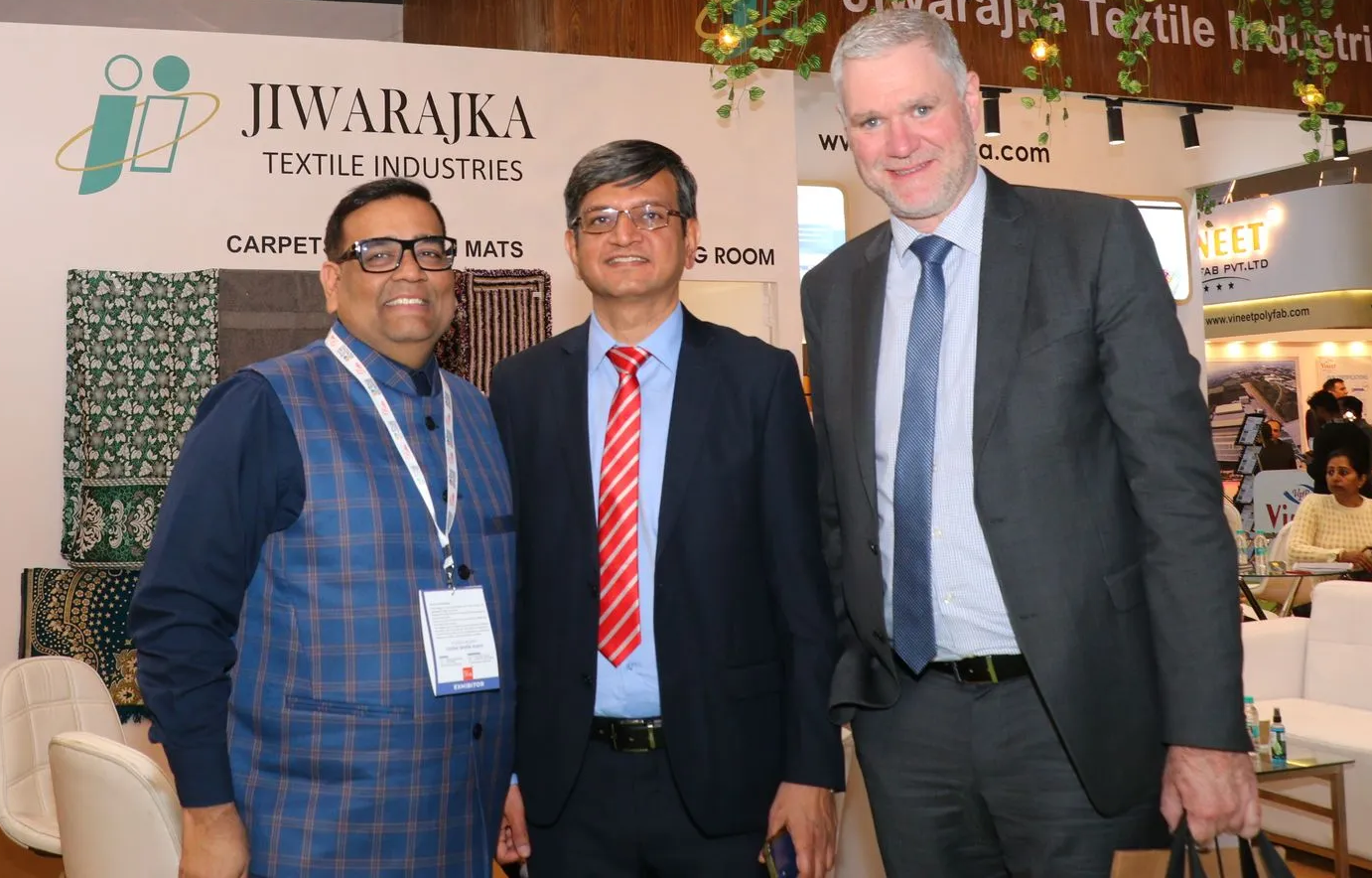
In this conversation, Surendra Jiwarajka, Joint Managing Director of Jiwarajka Textile Industries, reflects on how the textile industry has changed over the years—and why the ability to evolve has quietly become the most important thing for any manufacturer today.
Learn how certifications like GRS, OEKO-TEX, and ISO help build a responsible textile supply chain, especially in polyester yarn manufacturing.

Industrial yarn is not just another product—it’s a strategic shift towards function-driven textiles. As IDY demand continues to rise, manufacturers like Jiwarajka are bridging traditional polyester expertise with future-ready industrial solutions.
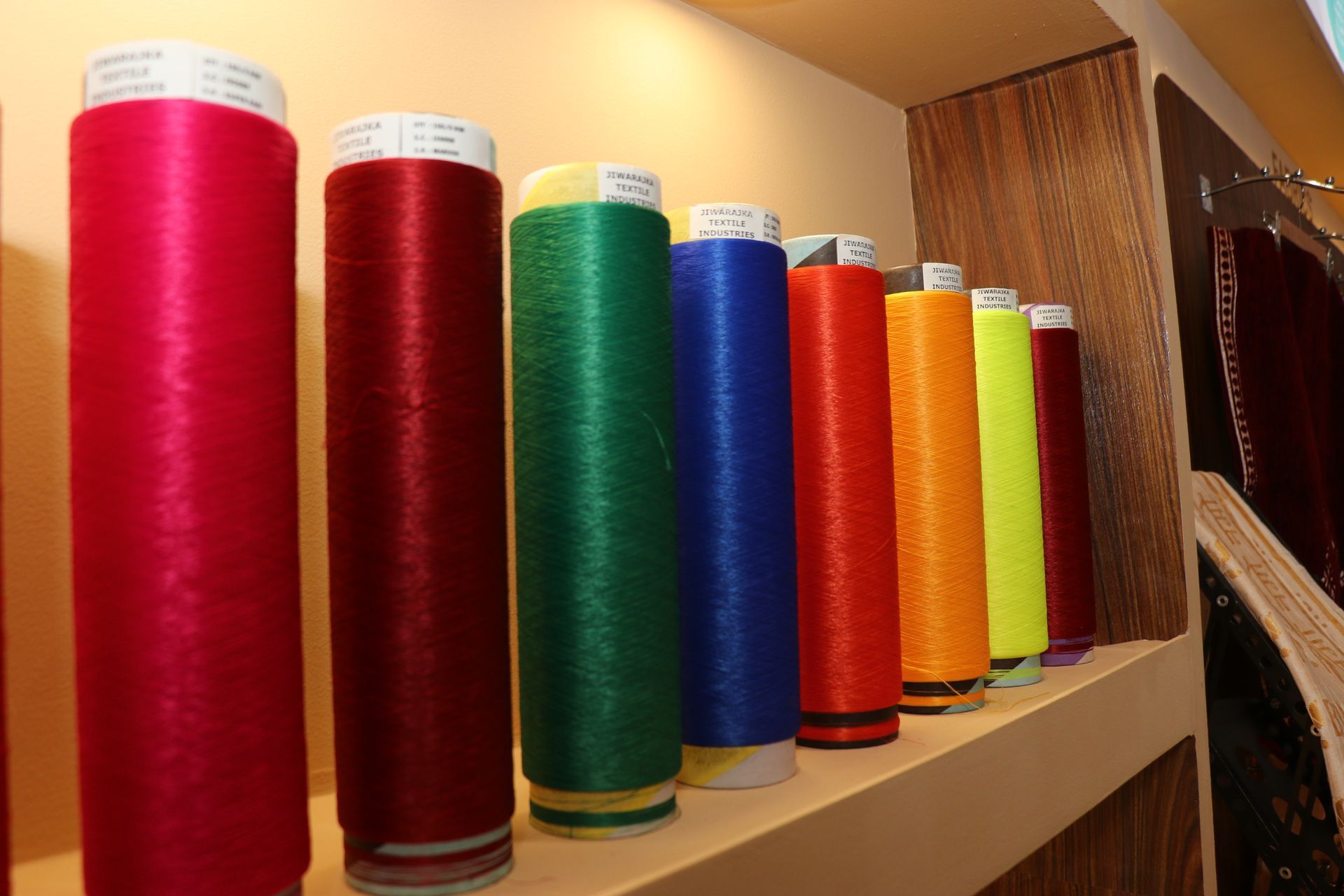
Weaving Tomorrow with Polyester Yarns POY, FDY, DTY, Super Dye Cationic, Cotluk Full Dull, Color (Dope Dyed), Crimp, Micro, Mother, Monofilament, and Industrial Yarns offer unique properties for innovative, sustainable textiles. Jiwarajka’s eco-conscious offerings amplify these possibilities, delivering high-quality yarns for a greener future.
The Jiwarajka and CiCLO® brand collaboration has ripple effects beyond the company’s operations. India, a global textile hub, generates significant synthetic products, with polyester dominating its production landscape.
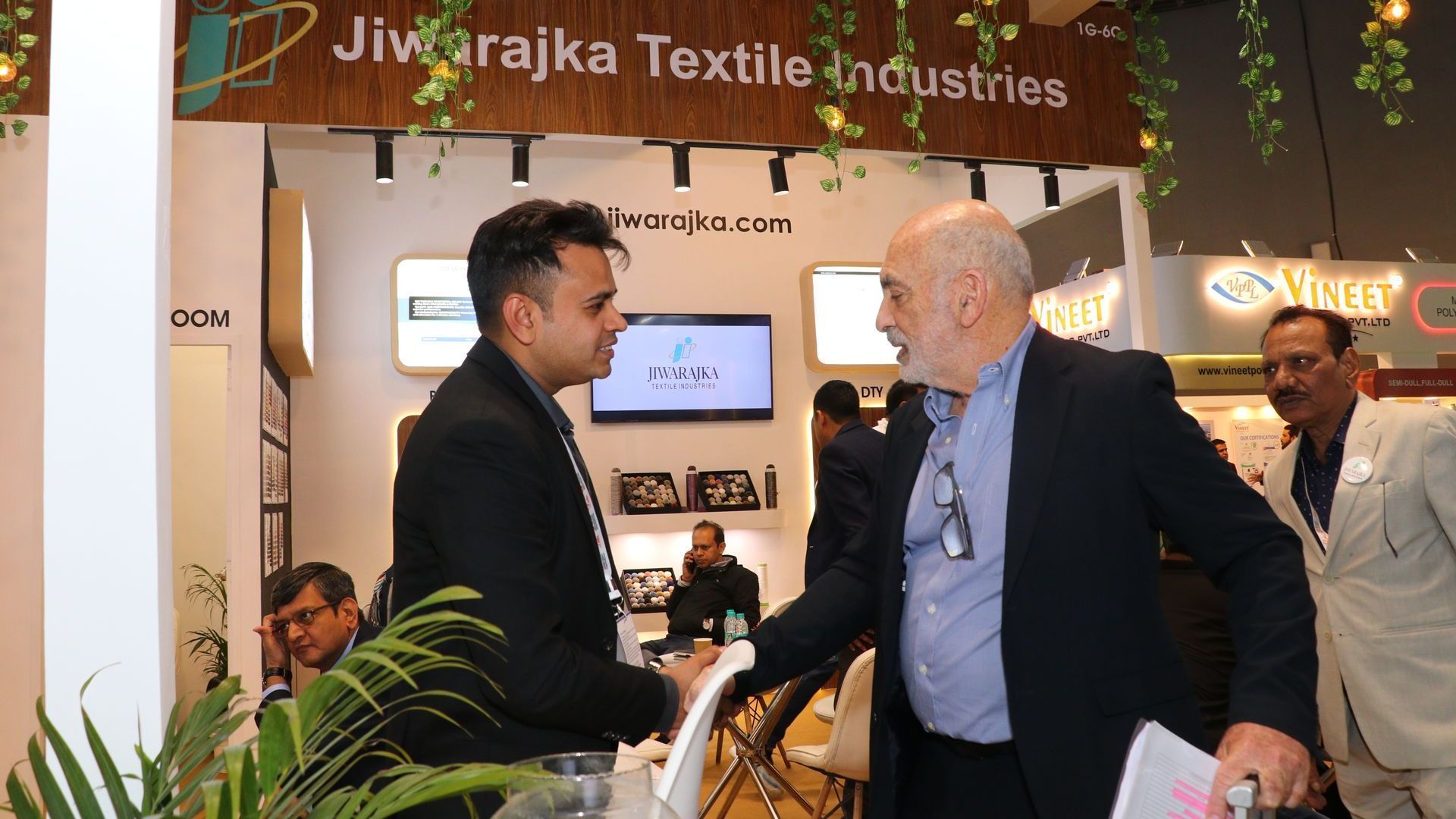
As the dust settles on Bharat Tex 2025, we’re left with excitement and urgency. The partnerships forged and ideas sparked will ripple through the industry for years. At Jiwarajka, we’re already thinking about leveraging this momentum—perhaps a new sustainable yarn line or a tech-driven process tweak. India’s textile story is just beginning, and Bharat Tex 2025 has stitched us firmly into its global fabric.