The Role of Certifications in Building a Responsible Textile Supply Chain
In today’s textile industry, trust, traceability and sustainability are no longer optional—they are essential.
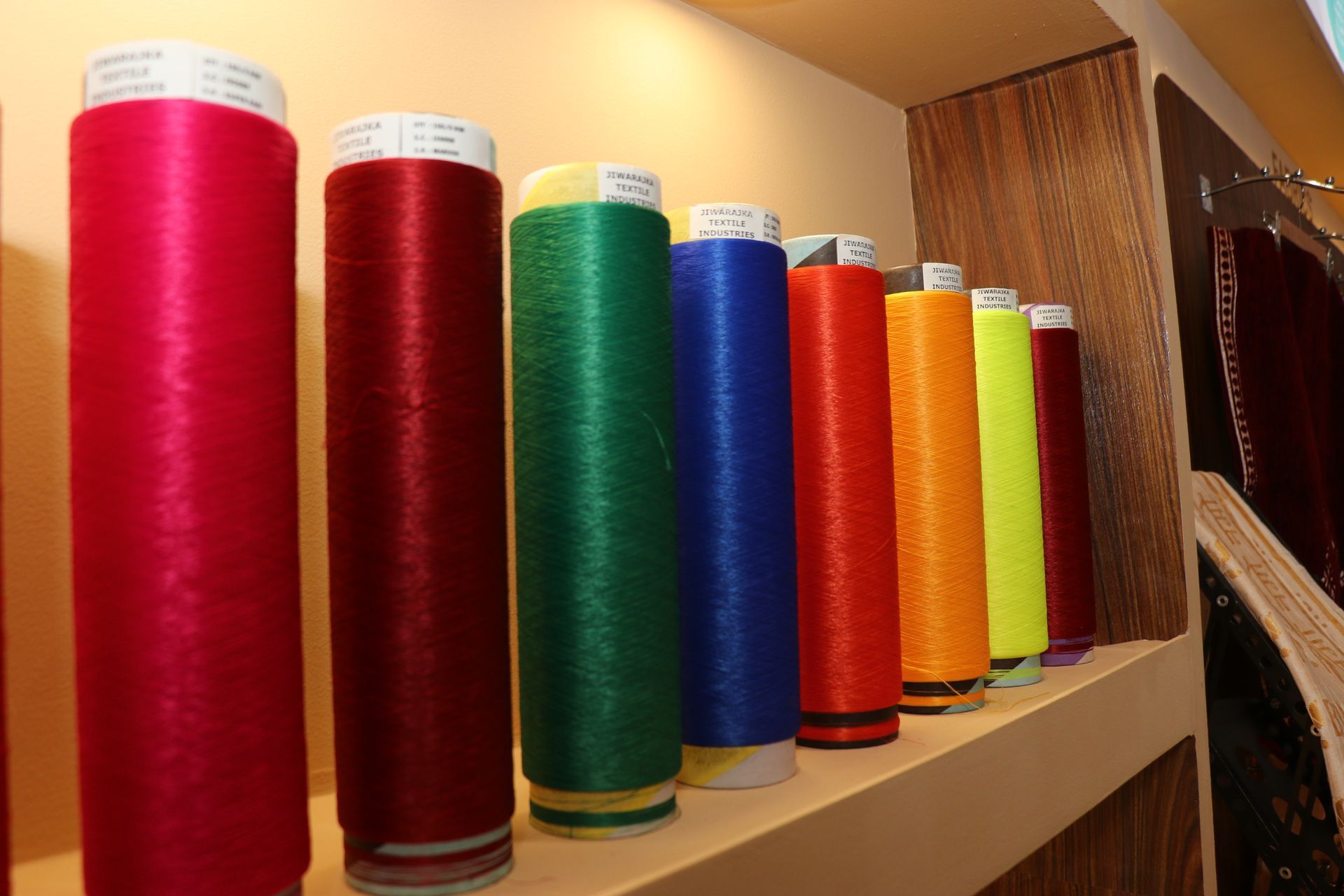
As brands, manufacturers and supply‑chain stakeholders face increasing pressure from consumers, regulators and investors, certifications provide a credible way to demonstrate that yarns and fabrics are produced responsibly. For companies like Jiwarajka Textile Industries, which specialise in polyester yarns (including POY, DTY and FDY) and serve global markets, certifications serve not only as a badge of credibility but as a tool to strengthen the supply chain.
Why certifications matter for textile supply chains
List of Services
-
Transparency and traceabilityList Item 1
A large challenge in textile supply chains is opacity. Yarns travel from polymer, spinning, texturising, dyeing, finishing through to fabric and garments. Certifications provide a third‑party verification of inputs, processes or final products, making it easier for brands to trace back and audit their upstream supply.
-
Environmental responsibilityList Item 2
Textile production is resource‑intensive (energy, water, chemicals) and often relies on virgin raw materials with high carbon footprints. Certifications help encourage use of recycled materials, safer chemicals, efficient processes and reduced emissions.
-
Human and social rightsList Item 3
Responsible textile supply chains address labour rights, safe working conditions and social welfare. Certifications increasingly incorporate social criteria, not just product quality or fibre origin.
-
Market access & brand risk mitigationList Item 4
Brands must ensure their supply chains meet regulatory, consumer and investor expectations. Certification helps manufacturers demonstrate compliance and can be a precondition for working with certain international buyers.
-
Quality assurance
Not all certification schemes are only about sustainability; some address product safety (chemicals, harmful substances) or quality management systems. Certification gives end‑users confidence in consistency, reliability and safety of yarns and fabrics.
Why polyester yarn deserves special focus
Polyester (PET) remains the dominant synthetic fibre in textiles globally, for good reason: cost‑effectiveness, durability, versatility, and ease of processing. But its growth and increasing scrutiny bring specific supply‑chain and sustainability challenges.
- Virgin vs recycled polyester: Virgin polyester is derived from fossil resources (petroleum) and its production has a significant carbon footprint. Use of recycled polyester (rPET) reduces reliance on virgin feedstock and contributes to circular economy goals. Standards such as the RCS and GRS are important in recycled‑polyester and synthetic‑fibre supply chains.
- Yarn processes are complex: Yarn manufacturing (POY, FDY, DTY) involves multiple stages — polymerisation, spinning, texturising, twisting, packaging. Each stage may add risks (chemical usage, energy intensity, worker safety). Certifications that cover yarn stage help ensure each link meets standards.
- Global regulatory & brand pressures: Many brands now require their polyester yarn suppliers to meet recycled content targets, chemical restrictions (for example REACH) and to provide chain‑of‑custody documentation.
- Broader fibre mix and blending: Many yarns are blends (polyester + cotton, polyester + elastane). Certification schemes help identify and verify blends, so that claims (for example contains 50% recycled polyester) are credible.
- Market differentiation: Certified polyester yarns (for example recycled + certified) provide a differentiator for suppliers seeking sustainable‑fashion and premium buyers.
Certifications held by Jiwarajka Textile Industries
Jiwarajka Textile Industries has taken a strategic approach to certification in building its polyester-yarn business. According to the company’s 'Our Certifications' page, Jiwarajka holds the following certifications:
Additionally, Jiwarajka is recognised by the Indian Technical Textile Association (ITTA), aligning the company with India’s expanding technical-textile framework and supporting its upcoming IDY operations.
Benefits of certification for brands sourcing yarn
- Reduced supply-chain risk: Certifications provide documented proof of compliance.
- Better transparency and traceability: Brands can map back to certified yarn lots.
- Enhanced sustainability credentials: Supports recycled content targets.
- Market access and differentiation: Certified yarns offer competitive advantage.
- Consumer trust: Certifications boost product credibility.
Practical tips for evaluating yarn suppliers’ certifications
- Check validity and authenticity.
- Understand certificate scope.
- Confirm fibre/material relevance.
- Evaluate facility governance.
- Align with brand sustainability goals.
- Use certifications in sourcing contracts.
Conclusion
Certifications are more than labels: they are frameworks that embed traceability, safety, social responsibility and environmental stewardship into the yarn and fabric supply chain. For polyester yarns the role of certification is especially important given synthetic feedstocks, multiple processing stages and global supply-chains. Jiwarajka Textile Industries’ certifications such as OEKO-TEX STANDARD 100, GRS, ISO 14001, ISO 45001 and ITTA recognition demonstrate a commitment to sustainable and responsible yarn production.
Sources
- Textile Exchange – https://textileexchange.org/polyester/
- Global Recycled Standard (GRS) – https://textileexchange.org/standards/global-recycled-standard/
- OEKO‑TEX – https://www.oeko-tex.com/
- ISO – https://www.iso.org/
- Jiwarajka Certifications – https://www.jiwarajka.com/our-certifications
- Indian Technical Textile Association – https://www.ittaindia.org/
- Performance Days – https://www.performancedays.com/