
Evolve or Become Irrelevant: A Conversation with Surendra Jiwarajka

There’s a certain kind of understanding that only comes from spending years in manufacturing—not just running a business, but seeing how an industry behaves over time. The ups, the downcycles, the phases where things feel stable, and the phases where everything starts shifting at once.
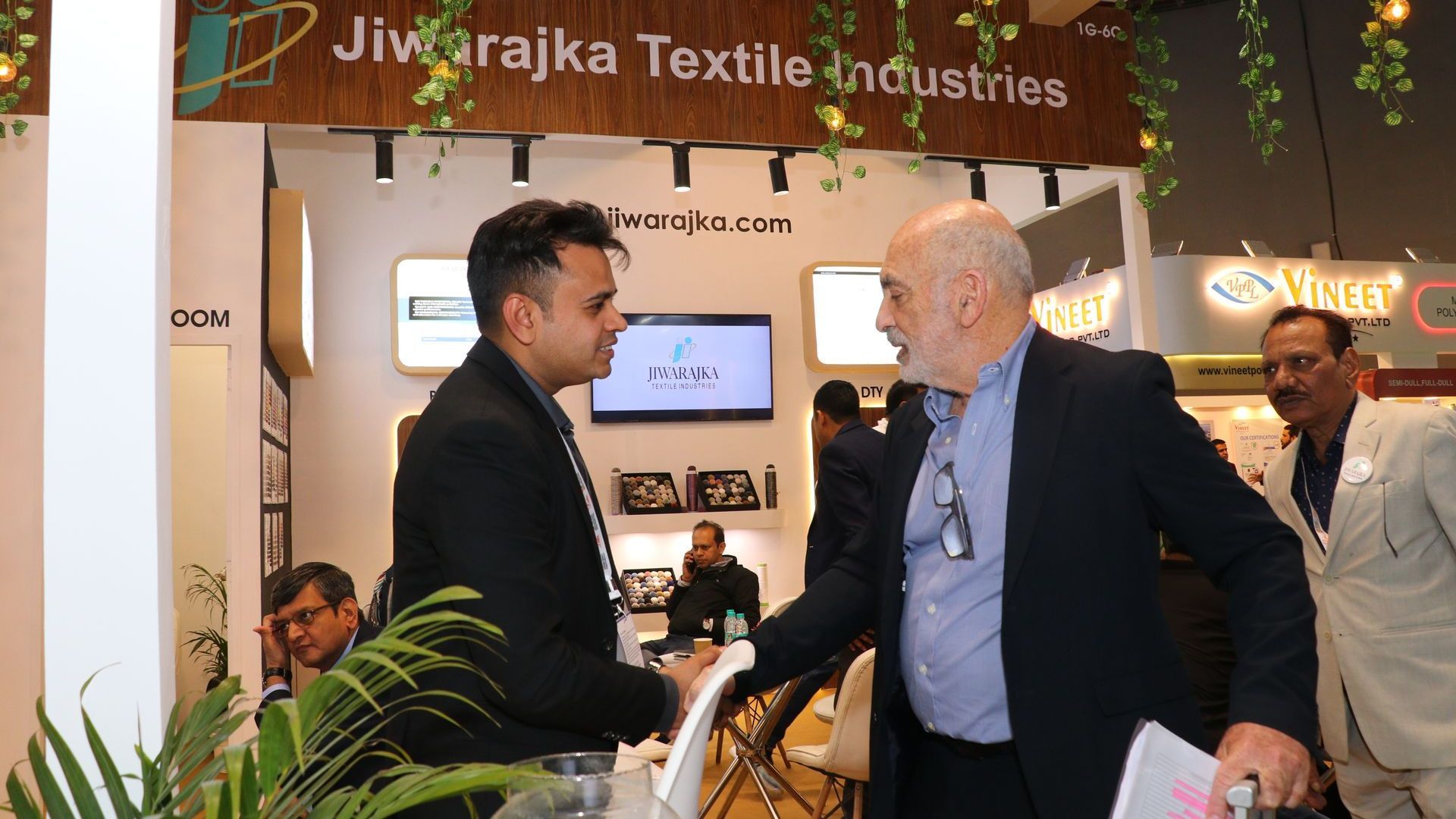
In this conversation, Surendra Jiwarajka, Joint Managing Director of Jiwarajka Textile Industries, reflects on how the textile industry has changed over the years—and why the ability to evolve has quietly become the most important thing for any manufacturer today.
What are some of the biggest changes you have seen in the textile industry over the years, and how has the pace of change evolved?
Over the years, the textile industry has become extremely competitive in India.
Earlier, there were fewer players, and margins were healthier. Businesses had a certain breathing space. Today, with the commoditisation of yarns and textile products, competition has expanded across the board—large players, small players, everyone is competing in the same markets.
Customers now have far more choice, and naturally, that has increased their buying power. Margins have come down, and the pressure to stay efficient has increased.
At the same time, the pace of change has become much faster. Technology is improving continuously—machines are more efficient, quality levels are better, and cost optimisation is far more precise than it used to be.
India today contributes roughly
4–5% of global textile and apparel trade, and the sector itself is estimated to be over
USD 150 billion. So the opportunity is large, but so is the competition—both within India and from other global manufacturing hubs.
Why is it important for textile manufacturers today to continuously evolve rather than rely on past success?
In manufacturing, the fittest always survive.
Old ways have worked in the past, but it is not necessary that they will continue to work in the present or in the future. The industry is changing on multiple fronts—technology, customer behaviour, and even the mindset of the next generation.
If you don’t evolve with time, there is a real possibility of becoming irrelevant.
At
Jiwarajka Textile Industries, the thinking has been to keep adapting—understanding where the market is moving, and aligning ourselves with that. It’s not about making drastic changes overnight, but about continuously improving and not getting too comfortable with what has already been built.
In your view, what are some of the key areas where traditional textile businesses need to adapt?
Traditionally, the textile industry has been labour-intensive, with a strong focus on cost.
That approach came from the nature of the business. But today, when you are competing with players who have large-scale operations, only focusing on cost has its limitations.
With newer technology, it is now possible to create value-added products, improve consistency, and reduce dependency on manual processes.
We have also been moving in that direction at Jiwarajka—putting more emphasis on processes, systems, and the ability to deliver more consistent quality across batches.
But more than anything, it requires a shift in mindset—from cost-driven manufacturing to quality-driven manufacturing. That shift does not happen overnight, but it is necessary.
How are global expectations from textile manufacturers changing?
Global expectations have changed quite a bit over the years.
Today, buyers have access to suppliers from across the world. So expectations are naturally much higher. Quality has become non-negotiable—you cannot afford inconsistency.
Service has also become equally important. Customers expect reliability, quicker turnaround times, and a certain level of professionalism in how business is conducted.
Compliance is another area where there has been a noticeable shift. While global standards and audits have definitely become more stringent, there is also an internal change happening within companies.
The newer generation is more aware and more structured in its approach. There is a stronger inclination to follow systems, comply with laws, and run businesses in a more organised manner, as compared to the earlier unorganised way of working that was more common in the industry.
So compliance today is not just about external pressure—it is also coming from within.
Sustainability is evolving in a similar way. It may not have been a focus earlier, but now it is becoming increasingly important.
At Jiwarajka, we’ve started taking steps in that direction—working with recycled raw materials and exploring solutions aligned with technologies like CiCLO. These are gradual steps, but they reflect the direction the industry is moving in.
What role does innovation play in a sector that is often seen as traditional and legacy-driven?
Innovation has become important, even in a traditional industry like textiles.
It doesn’t always have to be something very complex. Sometimes, even small improvements—in processes, in how production is managed, or in how products are developed—can make a difference.
But without innovation, it becomes difficult to stay competitive. Customers are more aware now, and expectations are higher.
So even a legacy-driven industry has to keep evolving in its own way.
How can family-run textile businesses balance the wisdom of experience with modern thinking?
Experience is very important in manufacturing.
The wisdom that comes from years of working in the industry—the values, the discipline, the understanding of cycles—is what builds a company. That foundation is what allows a business to sustain itself over time.
At the same time, the newer generation brings a different approach. There is more focus on systems, automation, and structured working.
The key is to balance both—the wisdom of experience and the approach of the new generation.
If that balance is maintained well, it creates a stronger and more adaptable organisation.
What advice would you give to the next generation entering the textile and manufacturing industry?
The next generation should focus on value-added products.
Commodity businesses are becoming increasingly difficult because margins are under pressure. Competing only on price is not sustainable in the long run.
If you can create products that add value to the customer, it helps build a stronger position in the market. It also helps in building a brand, which is becoming more important now.
That’s where the real opportunity lies.
Looking ahead, what will define the future competitiveness of Indian textile companies?
Going forward, competitiveness will depend on a few key things.
Quality has to be consistent. Service has to be reliable.
At the same time, cost optimisation will continue to matter, and that will come from better use of technology and systems.
India already has a strong base—skilled manpower, infrastructure, and experience.
The potential is there. The focus now should be on aligning with global expectations and continuing to improve.
Closing Thought
There’s no one formula for this industry.
But one thing is clear—the pace of change has increased.
And in manufacturing, standing still is not really an option.
You either keep evolving… or you slowly get left behind.